RainscalesChat with Us
← Patient Care
Intelligent Detection for Patient Care

Surgical Instrument Verification

AutoSurgical

AI vision for real-time surgical instrument counting, classification, and verification.

Manual instrument counting is slow and error-prone under pressure.

Manual instrument counting requires sustained attention during high-pressure procedures. Teams need a clear way to compare observed instruments with the expected set and review discrepancies before case completion.

AI vision supports real-time instrument verification.

Procedure-side cameras and AI-assisted recognition support initial, added-items, and final counts. AutoSurgical compares observed instruments with the selected set, displays missing, extra, and complete states, and retains each capture for review.

Support the existing count and reconciliation process.

Add AI-assisted recognition to the instrument verification workflow.

Flag missing or unexpected instruments for review.

Create a documented procedure-side audit trail.

From signal to clinical workflow.

1Detect instruments

Procedure-side cameras observe the instrument field and identify tools as they enter the workflow.

2Count and classify

Initial, added-items, and final counts compare observed instruments with the expected procedure set and show missing, extra, or complete states.

3Review discrepancies

Open discrepancies are surfaced to the surgical team for review, while capture history supports documented reconciliation. AutoSurgical supports, but does not replace, the facility’s required count procedures.

REAL-TIME SURGICAL VERIFICATION
Missing, extra, and complete reconciliation states

See missing, extra, and complete states during the case.

OR Control tracks initial, added-items, and final counts against the selected instrument set. A hospital-managed instrument catalogue provides the reference images and expected set lists used during verification, while capture history retains each recognized-instrument record for later review.

AutoSurgical OR Control: AI-assisted instrument reconciliation during the procedure.

Where Surgical Instrument Verification can create value.

Operating Rooms

Support real-time instrument identification and verification during active procedures.

Instrument Count Verification

Compare detected instruments against expected counts and flag discrepancies for review.

Procedure Documentation

Create a time-stamped record of instrument activity to support post-case review.

Tray Readiness

Use a separate set-verification workflow to compare the prepared tray with its standard list before or after a procedure.

Sterile Processing

Evaluate set verification within approved preparation or reprocessing workflows before presenting it as a deployed use case.

Multi-Site Standardization

Use a common verification workflow across surgical sites and procedure teams.

Built for the healthcare environment.

Plan each deployment around the people, systems, review steps, and governance requirements already in place.

Workflow PlanningIntegration requirements are confirmed for each solution and care environment.
Deployment OptionsProcessing and deployment are defined around the selected workflow.
Security PlanningAccess, retention, and governance requirements are reviewed before deployment.
Human-Reviewed WorkflowAuthorized clinical or operational staff review AI-assisted results before action.

Instrument verification

See every instrument status in one view.

AutoSurgical compares the detected instruments with the selected set and separates complete, missing, and extra items for a clear final check.

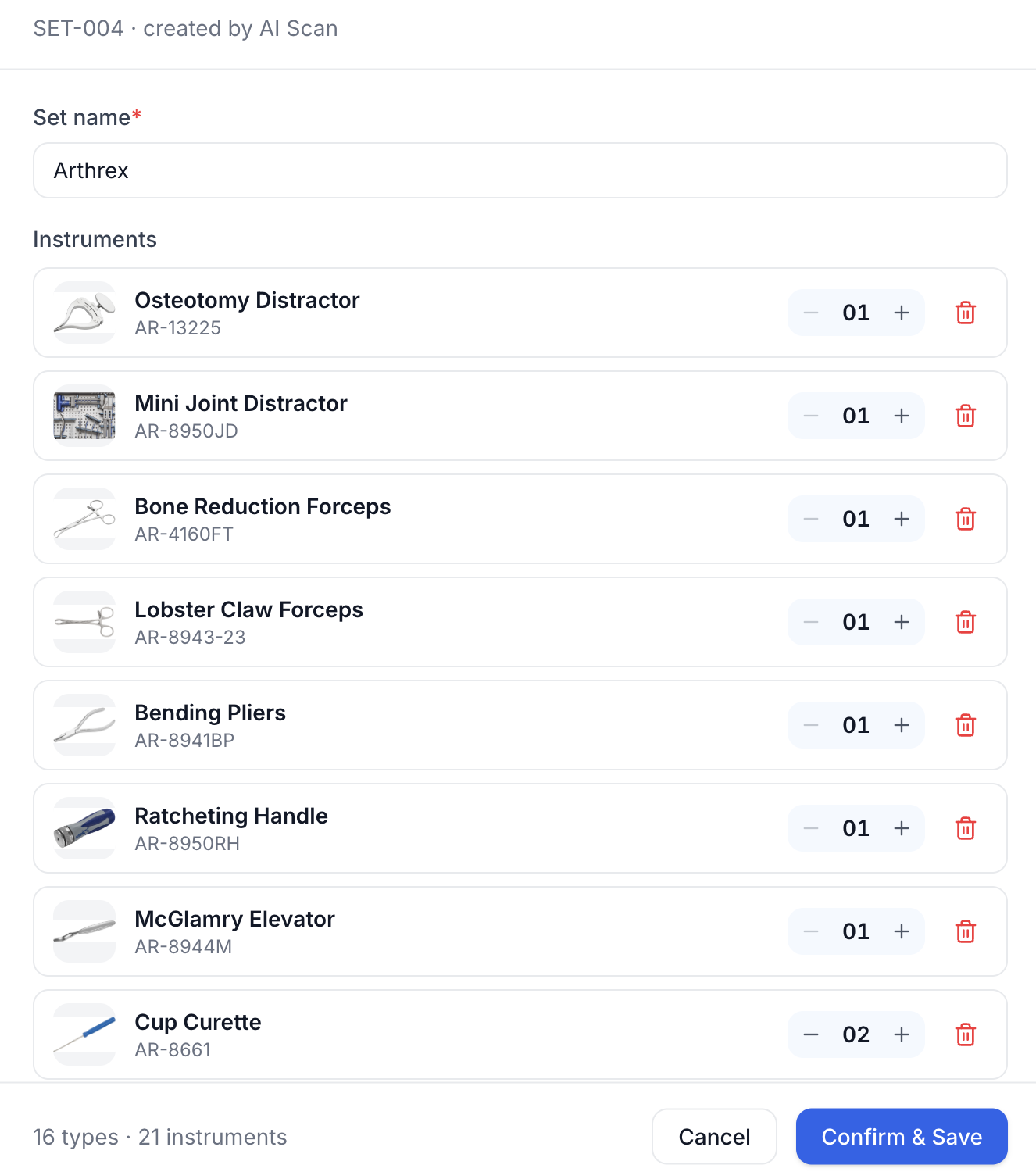
AutoSurgical instrument set configuration screen
Standardized configuration

Create a reliable standard for every set.

Organize individual instruments into a named set with the expected type and quantity. That standard becomes the reference point for every future verification.

  • ✓Centralized set and instrument management
  • ✓Expected quantities defined before the procedure
  • ✓Repeatable process across teams and locations
CompleteMatches the expected instrument type and quantity.
MissingShows what is absent or below the required quantity.
ExtraFlags instruments that do not belong in the selected set.

See how Surgical Instrument Verification could work in your environment.

Start with the healthcare workflow where the need is clearest, validate value with the clinical team, and expand across the portfolio on the same connected foundation.

Download: Instrument catalogue, count stages, set verification, and reconciliation workflow. Download the AutoSurgical verification guideScout the Rainscales owl